
The Next Wave of Healthtech Unicorns Will Be Bio + Compute Companies - Not SaaS Platforms
A 2026 perspective for deep-tech investors on the structural shift reshaping healthcare venture capital.
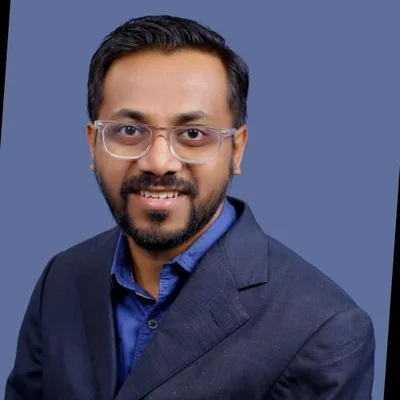
Kaustubh Savant
Senior Associate, SilverX Fund
The healthtech market crossed a clear inflection in 2025. After a decade dominated by SaaS-based telehealth, EHR overlays, and workflow tools, the highest-conviction venture capital is now flowing into a structurally different category: companies that fuse wet-lab biology with computational stacks, AI-driven drug discovery, programmable cells, foundation models for proteins, and lab-in-the-loop platforms. These "Bio + Compute" companies are emerging as the most credible unicorn pipeline of the next decade, while pure-play healthtech SaaS continues to decelerate.
The Numbers Behind the 2025 Shift
Investors put roughly USD 10.7 billion into AI-powered health-tech startups in 2025, already 24.4% higher than the USD 8.6 billion raised across all of 2024. Crunchbase's 2025 sector snapshot confirms that AI-related healthcare deal value remained robust through the year while broader digital-health rounds plateaued. Rock Health's A Tale of Two Markets 2025 year-end report pegged total U.S. digital health funding at USD 14.2 billion across 482 deals, up 35% on 2024, but with the gains concentrated in AI-enabled biology and clinical-grade tooling rather than the patient-facing SaaS that defined the 2021 vintage.
McKinsey now estimates that generative AI in pharma R&D could unlock USD 60-110 billion in annual value within a decade, primarily through faster lead discovery, protocol design, and trial-design optimisation. A peer-reviewed BCG study published in Drug Discovery Today found that AI-discovered drugs are clearing Phase I trials at roughly 80-90%, against a historical baseline closer to 50%, the first hard evidence that the compute-led approach actually compounds in the clinic, not just the slide deck.
Three Case Studies Defining the New Template
First, Recursion Pharmaceuticals completed its all-stock merger with Exscientia in late 2024 (deal value approximately USD 688 million) and posted FY2025 revenue of USD 74.7 million on February 25, 2026, up 27% year-on-year, while advancing clinical-stage programs across oncology, fibrosis, and rare disease. The combined company processes a multi-petabyte proprietary phenomic dataset on NVIDIA GPU infrastructure, generating trillions of searchable biological relationships. It is a vertically integrated drug company built around a data flywheel, not a software vendor selling seats.
Second, Isomorphic Labs, the Alphabet spin-out from DeepMind, closed its first-ever external funding round on March 31, 2025. USD 600 million led by Thrive Capital, with participation from GV and additional investment from Alphabet, to advance AlphaFold-derived therapeutic programs into the clinic. The deal structure, biology-as-a-service plus an owned pipeline, is now the reference model for AI-native therapeutics platforms.
Third, Retro Biosciences, backed by Sam Altman and supported by an OpenAI partnership on protein-design models, commenced its first-in-human longevity trial in 2025 and is reportedly raising up to USD 1 billion at a USD 5 billion valuation. Retro is emblematic of a new founder profile: model-builders who have moved from pure-software AI into wet-lab biology because that is where the next valuation step-up sits.
The India Context
India minted only six new unicorns in all of 2025 (Netradyne, Porter, Drools, Fireflies.ai, Jumbotail, and Dhan) and not one was a healthtech SaaS company. The contrast with the 2021 cohort, when the country produced four healthtech unicorns in a single year on USD 2.2 billion of digital-health funding, is striking.
The growth story has migrated to biology. The India BioEconomy Report 2026, released by BIRAC on March 19, 2026, sized the Indian bioeconomy at USD 195.3 billion in 2025, up 18% year-on-year, and on track for the government's USD 300 billion target by 2030. Biopharma remains the largest contributor at more than half the total. For comparison, the entire Indian SaaS sector across all verticals reached roughly USD 26 billion in 2024.
Government policy has caught up. India's BioE3 Policy, formalised in August 2024 and now in active rollout through dedicated bio-AI hubs and biofoundries, prioritises high-performance biomanufacturing and AI-driven precision biotherapeutics as one of six thematic pillars. Bengaluru-based Bugworks Research, India's most globally visible Bio + Compute asset, has raised approximately USD 45 million across rounds for its AI-guided antibiotic and oncology pipeline, modest by U.S. standards, but operating with a fraction of the cost base and substantially better capital efficiency.
Why the SaaS-Platform Thesis Is Losing Altitude
- Distribution is no longer a moat. Health systems consolidated post-COVID, and the surviving buyers negotiate hard on per-seat pricing.
- Defensibility has migrated from workflow to assets. A SaaS layer can be replicated; a multi-petabyte phenomic dataset paired with a clinical-stage molecule cannot.
- Outcomes-based reimbursement now favours asset creators. The U.S. Inflation Reduction Act's drug-pricing provisions and India's PMJAY scheme reward therapies that demonstrably bend the cost curve, not seat-based software.
Implications for Investors and Founders
The next decade's healthtech unicorns will look less like Veeva or Innovaccer and more like Recursion, Isomorphic, and Bugworks: capital-intensive at seed (USD 50-150 million Series A is the new normal), GPU-bound, wet-lab-integrated, and built around proprietary biological data flywheels. SaaS playbooks (land-and-expand, freemium, NRR optimisation) do not transfer cleanly. What does transfer is rigorous unit economics, compounding data advantages, and platform extensibility across indications.
For Indian founders the timing is rare: world-class CROs in Hyderabad and Bengaluru, falling sovereign-AI compute costs, BioE3 grant capital, and a returning diaspora of principal scientists. The next Indian healthtech unicorn is unlikely to be a doctor-discovery app. It is more probably a protein-design company in Bengaluru with a wet lab in Genome Valley.
The thesis is therefore simple to state and difficult to execute: back companies where biology and compute are not features, but the company itself.
References
- IntuitionLabs. (2025). AI biotech funding: A 2025 analysis of VC investment trends. intuitionlabs.ai
- Crunchbase News. (2025). Sector snapshot: Funding to AI-related healthcare startups is robust this year. crunchbase.com
- Rock Health. (2026, February). 2025 year-end digital health funding overview: A tale of two markets. rockhealth.com
- McKinsey & Company. (2025). Generative AI in the pharmaceutical industry: Moving from hype to reality. mckinsey.com
- Jayatunga, M. K. P., et al. (2024). How successful are AI-discovered drugs in clinical trials? Drug Discovery Today, 29(6). sciencedirect.com
- Pharmaphorum. (2024, August 8). AI biotechs Exscientia and Recursion agree $688m merger. pharmaphorum.com
- Recursion Pharmaceuticals. (2026, February 25). Recursion reports fourth quarter and full year 2025 financial results. ir.recursion.com
- Isomorphic Labs. (2025, March 31). Isomorphic Labs announces $600m external investment round. isomorphiclabs.com
- Longevity.Technology. (2025). Retro Bio commences first-in-human trial. longevity.technology
- Mascarenhas, N. (2025, January 24). Retro Biosciences, backed by Sam Altman, is raising $1 billion to extend human lifespan. TechCrunch. techcrunch.com
- Inc42. (2025). Six startups that entered the unicorn club in 2025. inc42.com
- Inc42. (2022). Healthtech in the spotlight! With 4 unicorns and $2.2 Bn in investment. inc42.com
- Press Trust of India. (2026, March 19). India's bioeconomy grows 18% to $195.3 billion in 2025. Business Standard. business-standard.com
- Yadav, P., et al. (2025). Establishing BioE3 centres: Catalyzing India's biomanufacturing transformation. Frontiers in Bioengineering and Biotechnology, 13. frontiersin.org
- Tracxn. (2025). Bugworks Research - 2025 company profile, team, funding & competitors. tracxn.com